Burnout, Pickle Jars, and the Weight We Carry
This week I have been thinking a lot about burnout. Not teacher burnout, which we often hear about, but student burnout. As adult learners and teaching candidates, many of us feel it.
I tend to look for more than one reason for things. That is just how my brain works. Sometimes it helps me understand complex situations, and sometimes it sends me into long tangents before I remember to come back to the main idea.
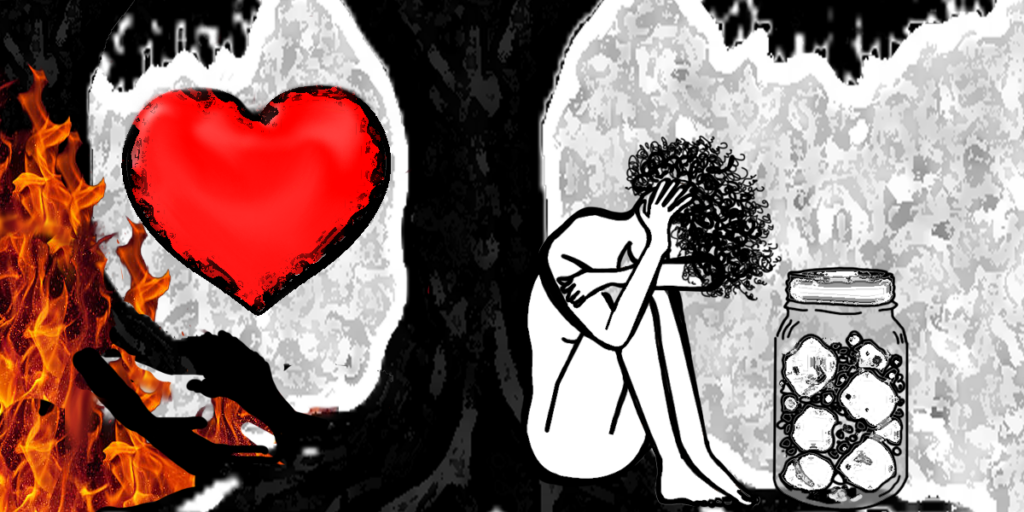
Thinking about burnout reminded me of the pickle jar story. The idea that our day is like a jar we fill with rocks, pebbles, and sand. The big rocks are the most important things in our life. The pebbles are the necessary responsibilities. The sand is everything else that fills the space if we let it.
For a while, I tried to look at my daily life that way, asking myself whether I was sorting my jar intentionally, or just filling it with whatever came first.
This week, my jar felt very full.
A war broke out in my home country. My family is there. The fear and uncertainty make it very hard to focus. I find myself constantly checking the news, almost afraid to turn it off. The stress, lack of sleep, and emotional disorientation are things I have never experienced to this level before.
Still, I show up. I submit assignments. I try to smile so people around me do not see me as dramatic or complaining. But inside, I keep reminding myself that self-care and giving ourselves permission to feel hurt and sad are necessary.
Researchers who study burnout describe it as a state of emotional exhaustion, disconnection, and a feeling that we are no longer able to meet the demands placed on us. Psychologist Christina Maslach describes burnout as something that happens when the demands of work or school keep growing while our resources for coping and recovery remain limited. Other researchers studying adolescents have found similar patterns in students, where heavy workloads, pressure to perform, and lack of time for rest slowly build into exhaustion and loss of motivation. What I find important in this research is that burnout is not usually seen as a personal weakness. Instead, it often grows out of environments where expectations are high, but support, rest, and connection are limited.
And this struggle is not only mine. Many people have lived through wars, displacement, and uncertainty. People from Iraq, Libya, Palestine, Syria, Ukraine, Afghanistan, and many other places know this reality far better than I do. Right now, it feels like I am living through a nightmare.
Burnout does not only come from big disasters like war. Sometimes it comes from loss, expectations, breakups, uncertainty, or simply the weight of many small problems happening at the same time.
In physics, we talk about something called the yield point. A material, like metal, can bend under pressure and still return to its original shape. But if the load is too heavy, or lasts too long, the material crosses a point where it cannot bounce back the same way. It moves from elastic to plastic deformation.
I sometimes think humans are similar.
When the load is too heavy, like trauma, or when stress continues for too long, something begins to shift inside us. We still function. We keep going. But we feel more fragile, more anxious, more exhausted.
Maybe that is what we call burnout.
This week I saw different students crying. One because of a family loss. One because of a harsh comment from an instructor. One simply because I asked if they had looked at our group project yet. And me, crying quietly because of war and worry for my family.
For a moment I wondered if it was the full moon, the weather, or the stress of deadlines. But I think the real answer is simpler.
It is life.
Life is always happening in the background, but we often organize our days around tasks and responsibilities instead of around being human. Our jars become filled with duties and expectations, while the rocks, rest, relationships, care, meaning, get pushed aside.
When that happens, exhaustion grows. And when we are exhausted, emotions become stronger. We cannot rest, so burnout grows. Burnout makes us more emotional, and the cycle continues.
What I wish we practiced more is something my culture valued deeply: being together in difficult moments.
People did not mourn alone. People did not worry alone. Community was always present. Life was shared.
Maybe that is something we need to relearn.
When our jars feel too full, maybe the answer is not to carry everything ourselves, but to let others hold some of the weight.
I wonder how we can do this as teachers. How can we walk into our classrooms with a sense of connection that allows us to share and to know what is happening in each other’s lives? Privacy is important, but sometimes it can also become a burden. It can create walls between people. Because of those walls, we end up asking many questions later or relying on counsellors to figure out what is happening in someone’s life.
What if we simply knew that the person beside us had just lost someone? What if we could help them with their homework, cook a meal, go shopping, or watch their kids while they are dealing with the big rocks in their life?
I hope I can create a sense of community in my classroom where we feel a bit like a family. A place where people feel they matter simply because they are here, sharing this moment together. A place where life is recognized as part of learning, and where the weight of things is carried by all of us, not alone.
But that takes practice. Many people want to help, but we are often unsure how. We say, “What can I do for you?” because we do not know what else to say. Still, sometimes one or two people surprise us. They know how to simply sit beside us. I want to become one of those people.
Sometimes I realize how much I enjoy being independent and in control, but the truth is that we are never fully in control. Storms come. Floods come. Life shifts unexpectedly. What holds me steady are my values: connection, relationships, and the belief that life is deeply interconnected.
Maybe burnout happens most when we feel we must carry everything alone. And maybe healing begins when we remember that we were never meant to carry life alone.